



Elective Surgeries for Hand Function
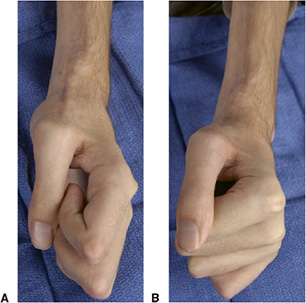 If you are one of the thousands of people with limited hand and arm function as the result of a cervical spinal cord injury, would you be surprised to know that there is a proven road to increased function and independence that doesn’t involve a cure?
For over 40 years, orthopedic surgeons have been helping individuals with SCI regain pinch, grasp, finger flexion, triceps use and more by transferring tendons to connect enervated muscles (below the level of injury) with muscles patients can control. As surgeons have refined the procedures and studied the outcomes, immobilization times have decreased and results have improved. Most surgeons report nearly universal happiness with the outcomes and promise no noticeable impact, should a cure arrive. Yet only a small percentage of those eligible for the surgery take advantage of it, and many quads don’t even know it is an option, raising the question: why?
Drs. Scott Kozin and Dan Zlotolow, orthopedic surgeons at the Philadelphia Shriners Hospital and published experts on tendon transfers, say the answer is complicated and are working to address its many roots.
“It’s an uphill battle for us,” says Zlotolow. “There’s a bias among physiatrists in particular, who don’t see the results of these surgeries so they don’t believe in them and think it’s just a bunch of surgeons operating willy-nilly — they don’t really see that there is any benefit to them. They generally tend to discourage patients from having anything done. … It’s very frustrating.”
Additionally, Zlotolow says the surgeries are “underused” because of the relatively small number of surgical centers where doctors specialize in transfers and because of fears that transfers could impede an eventual cure. His response to concerns about the impact on a cure has the polished sound of a line that has been delivered many times. “Tendon transfers do not get in the way of a cure,” he says. “The day we have a cure is the day you will be cured, whether you’ve had tendon transfer or not. You can think of the tendon transfers as a way to make you as functional as possible until the cure comes.”
As little as 10-15 years ago, lengthy immobilization times and rehab periods also discouraged potential beneficiaries, but new techniques and a better understanding of how best to rehab tendon transfers have all but eliminated those excuses.
A biceps-to-triceps transfer to give a C5 or C6 quad the ability to extend his/her elbow and use the biceps to function like triceps formerly required up to six weeks in a motion-restricted cast before rehab could begin. Now recipients are mobilized as quickly as one-week post-surgery. For wrist and grip transfers, immobilization can be as little as one day. “We’ve got pretty good data that shows that biceps-triceps does better with less post-operative immobilization and is not as hard to relearn,” says Kozin.
Kozin and Zlotolow described their target audience as “the person who has a little bit of function in their arm, but not enough to be independent.”
“Because most of the time, if you have a little bit of function in your arm we can get you independent,” says Zlotolow.
As an example, he described how tendon transfers might benefit a C7 quad with some grasp, a weak pinch and decent triceps. “You can take that person and give them a strong pinch and a stronger grasp, and usually you can give them opposition [control of the thumb],” he explains. “The difference between somebody who has no pinch and no grasp and you give them pinch and grasp — that’s huge.”
Both doctors said transfers can benefit someone as low as C8, but acknowledged that the farther down the injury, the less the benefit.
Kozin encouraged interested quads to reach out directly to a surgeon who is known for doing transfers or an SCI center that can help connect you with one. While there may not be a multitude of surgeons specializing in tendon transfers, Zlotolow believes the patient-pleasing surgery has attracted a uniquely loyal brand of doctor. “People who do this surgery do it because they really care about it,” he says. “Nobody does it just to make money. People who are doing it are very committed to people who have spinal cord injuries.” Shriners Hospitals in Philadelphia, Chicago and Sacramento, Calif., all offer transfer options for minors, and the doctors there can help connect adults too.
Once connected, one of those individuals should be able to put you in contact with someone with a similar level of injury who has had whatever transfer you are interested in. “We’ve found that personal connections are the most effective way to educate and help people learn [about potential benefits],” says Kozin.
Reference: http://www.spinalcord.org/elective-surgeries-for-hand-function/