



Safe Transfer Technique
 Transferring in and out of your wheelchair puts higher stress on your arms and shoulders than anything else you do on a regular basis. Learning the correct way to transfer is extremely important in order to keep your arms functioning and pain-free.
Get proper transfer training
Everyone needs individualized transfer training to preserve function and avoid injury. Work with a physical therapist to learn the best transfer technique for you and your body.
Your transfer technique may need to be readjusted as years go by. If you develop any problems or if your living circumstances (e.g. pregnancy) or activities change, go back to your therapist for advice.
Safe transfer rules and technique
- Frequency - Only transfer when necessary, keeping the number of transfers to a minimum.
- Transferring downhill is easier and, at modest height, safer than transferring uphill.
- Technique - Steps (These are general steps. Work with your therapist to fine tune them for you.):
- Positioning/setup
- Get as close as possible to the surface you want to move to.
- Lock your wheels if transferring from a wheelchair.
- Put your feet on floor (unless your therapist tells you not to).
- Scoot to the edge of your chair.
- Get your arm rest out of the way on the side next to the surface you are transferring to.
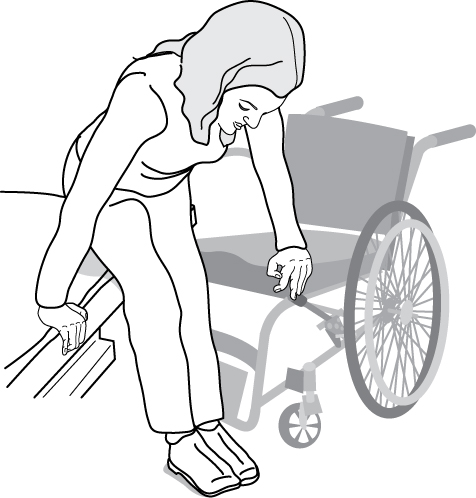
- Lean your trunk forward.
- When transferring, your head should move in the opposite direction of your hips. This is known as a head-hips relationship and can help with movement and clearing obstacles.
- To protect your shoulders, keep your arms as close to your body as possible (about 30-45 degrees away from your body) while you are lifting your weight.
- To protect your wrists, try to grip an edge or grab bar with your fingers rather than laying your hands flat. Keeping your hands flat and putting your weight on your palms is a dangerous position that can lead to wrist problems such as carpal tunnel syndrome down the road.
graphic of woman moving to a bed
- Positioning/setup
 Lift-off
- Make sure you are clearing obstacles (not bumping or rubbing) to avoid shearing and pressure sores.
- If you cannot perform the transfer in one smooth movement while keeping your arms close to your body, move in several small steps and/or use a transfer board.
- Be careful sliding across the transfer board because the motion can damage your skin. Use a pad or towel on the board when bare skin may come in contact with the board during the transfer.
- Alternate leading arms and direction of transfers to keep your arm muscles balanced and reduce strain on one side.
- Maintain ideal body weight. The more you weigh, the more weight you have to transfer and the more stress you put on your shoulders and arms.
- If you are unable to perform a transfer safely or are at risk for developing arm pain, you should strongly consider using one of the many kinds of patient lifts available.
Reference: http://www.msktc.org/sci/factsheets/Safe-Transfer-Technique
by SCIVideoBlog on Jul 09, 2014