



What to do Before a Fire Occurs
 Identify and determine the nearest emergency exit or exits within your home. It is important to always know the safest and quickest exit from any location you are in and it should always be based on your physical capabilities. If it is at all possible, try to live, or have your sleeping area, close to an accessible exit. Then, in the event of an emergency, you will have the quickest escape route. You might require some accommodations to facilitate an emergency exit such as a ramp or removal of barriers. Make the adjustments necessary to ensure a safe escape route. In addition, be sure that you can also open all locks on windows and doors throughout your house.
- Install heat or smoke detectors throughout your home. Key locations for smoke alarms are: the kitchen, basement, storage areas, trash areas, accessible attics, sleeping areas, and hallways. Please note that there are various types of smoke alarms. The chart below describes what heat or smoke detectors are appropriate for each living space.
 Identify and determine the nearest emergency exit or exits within your home. It is important to always know the safest and quickest exit from any location you are in and it should always be based on your physical capabilities. If it is at all possible, try to live, or have your sleeping area, close to an accessible exit. Then, in the event of an emergency, you will have the quickest escape route. You might require some accommodations to facilitate an emergency exit such as a ramp or removal of barriers. Make the adjustments necessary to ensure a safe escape route. In addition, be sure that you can also open all locks on windows and doors throughout your house.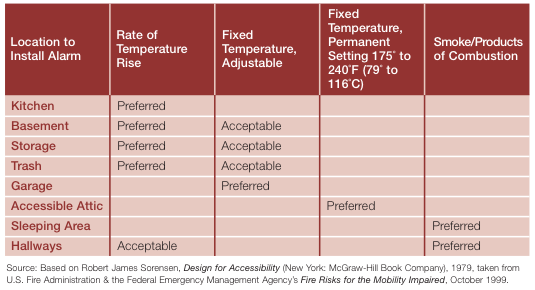
- Heat and smoke detectors can reduce the chance of dying in a home fire by approximately 60%. This device is important to have in your home. It is also important to make sure that your smoke alarms are functioning properly. Make sure that smoke alarms are kept cleaned and vacuumed regularly to remove dust particles. In addition to this, you should test the batteries monthly and replace batteries twice a year to ensure that they are working properly. If your smoke alarms are connected to the electric circuits of your residence, you should have battery backups in case of an electrical failure. If you are unable to perform these tasks yourself, ask your friends, family members, building managers, or someone from the fire department to help you out.
- Learn how to use a fire extinguisher. For those who use wheelchairs, you might want to consider mounting a small personal extinguisher in an accessible place. This will be beneficial if you cannot “stop, drop, and roll” if your clothing catches on fire.
- Another beneficial resource of information is your local fire department. They can provide valuable information regarding better escape routes, equipment, and potential hazards within your home. Become knowledgeable of the fire department’s restrictions and inform them of yours.
Reference: http://www.spinalcord.org/resource-center/askus/index.php?pg=file&from=2&id=664
by SCIVideoBlog on Jun 28, 2014