



New Trial May Be Step Forward For SCI
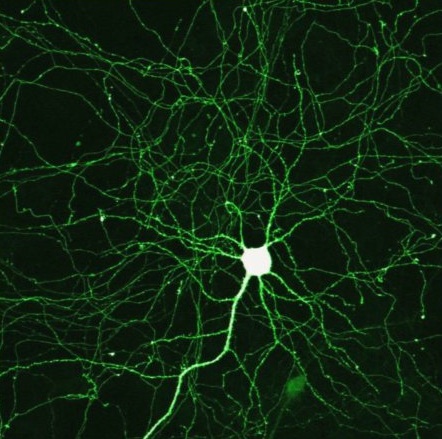 In what may be another step forward in treating spinal cord injuries, a safety trial will begin this year on the practice of injecting stem cells directly into the injury site, Neuralstem Inc. announced Wednesday.
The Maryland company said the University of California, San Diego's Institutional Review Board had approved its clinical trial protocol, which also has approval from the Food and Drug Administration.
The first eight patients who will be enrolled will be paraplegics who had a thoracic spinal cord injury one to two years ago and have no motor or sensory function below the point of their spinal cord injury.
Thoracic spinal cord injuries are rare, according to the Christopher and Dana Reeve Foundation, because of the protection afforded by a person's rib cage. In addition to the loss of function in legs, patients also experience a loss of physical sensation, bowel and bladder problems and sexual dysfunction. However, in most cases, function of the arms and hands are not affected.
It's the latest trial designed to inject stem cells into patients' spines. The trial is supposed to show that the drug - stem cells, in this case - is safe, although researchers hope to provide some benefit as well.
In 2009, California-based Geron Corp. not only injected the first stem cells into a patient's spinal cord, it was the first to use the highly controversial derivative of human embryonic stem cells. But after treating at least four patients, the company chose to shut the trial down in 2011 because of its expense and the company's focus on cancer research.
One week later, Neuralstem began its clinical trial in patients with amyotrophic lateral sclerosis, also known as ALS or Lou Gehrig's disease. That trial used a new device to inject stem cells into the spine without causing additional injury to the spinal cord. Neuralstem's cells are not embryonic stem cells but rather cells taken from fetal spinal cords, which have already started to become nerve cells.
California-based StemCells Inc. launched spinal cord trials in Switzerland in 2011, using its own type of neural stem cells also derived from fetal tissue. It injected its first North American patient in Canada this year.
Unlike the goal of the Geron trial (similar to StemCells'), which was to re-mylenate nerve cells to re-establish connections from the spine to the brain - like fixing an exposed wire by providing a new cover - the goal in this new trial is to "actually build new circuitry," Neuralstem CEO Richard Garr said.
"The stem cells are injected directly into the area of the injury and jump the gap with the new circuitry we've built," he said. "These cells don't migrate to the site."
In animal experiments, rats were injected with these human stem cells and recovered significant function in all lower extremity joints, according to Neuralstem. "The cells turned into neurons which grew a 'remarkable' number of axons that extended for 'very long distances,' bridging above and below the point of severance," the company says in a statement, quoting study results from August 2012.
Neuralstem is trying to reconnect the nerve cells from below the injury site to cells above the point of injury to re-establish signals going to the brain, says Karl Johe, the company's chairman and chief scientific officer, who developed the cells.
Johe says he hopes the first patient will have the surgery to get the stem cells by July. "And then it would occur about once a month," he added.
As for the most recent research, which discussed a much simpler method called epidural stimulation, Johe says it's a complimentary approach. This month, researchers showed that four patients who had had spinal cord injuries for more than two years were able to 'reawaken' their muscles, so to speak: move their legs when electrodes implanted in the back were turned on, providing electrical stimulation to the spinal cord.
"There has been debate whether the motor neuron circuitry is intact below the injury point," Johe said. "So now we know for sure (it is)."
Reference: http://thechart.blogs.cnn.com/2014/04/16/new-trial-may-be-step-forward-for-spinal-cord-injuries/